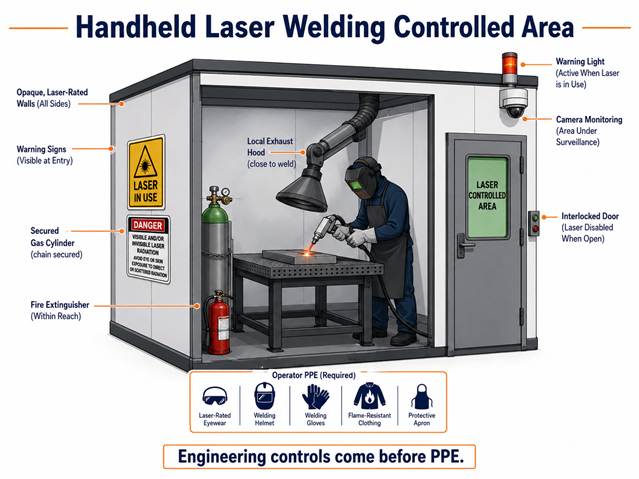
Safety, Fume Control, and PPE

Learning Objectives Figure 3-1. Example of a controlled handheld laser welding area with access control, extraction, monitoring, and operator PPE. 3.1 Class 4 Means Immediate Hazard The U.S. Food and Drug Administration describes Class IV lasers as capable of causing immediate skin and eye injury from the direct or reflected beam and as presenting a … Read more

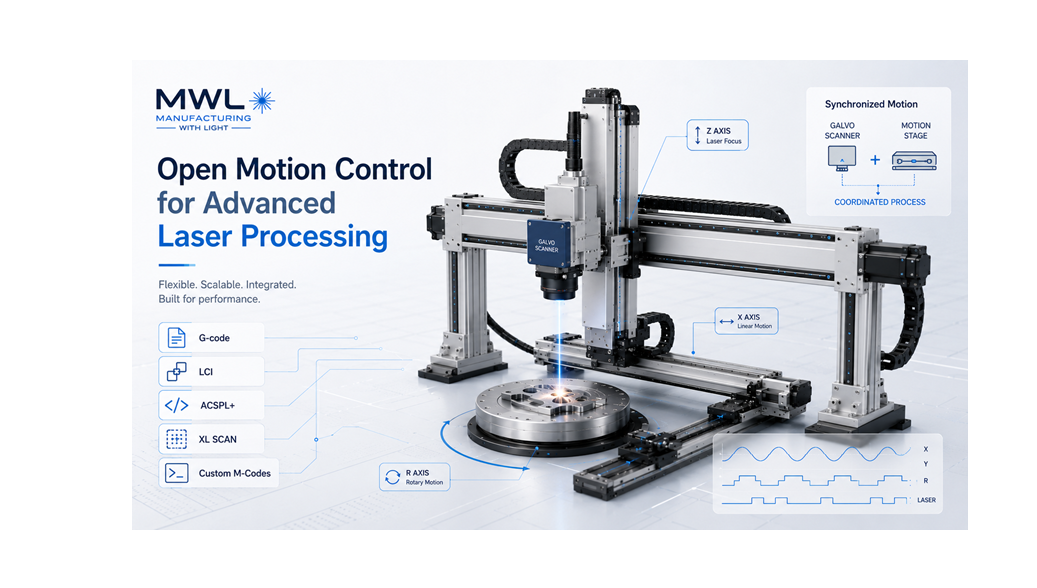
Why an Open Motion Control Platform Belongs in the Conversation for Advanced Laser Processing

In high-end laser material processing, the motion controller is not just moving axes. It is helping determine how energy is delivered into the material. That distinction matters. Whether the process is laser cutting, welding, drilling, micromachining, cleaning, cladding, or scanner-based processing, the controller must coordinate motion, laser timing, process I/O, recipes, sensors, and recovery logic. … Read more

Handheld Laser Welding Safety

Summary Handheld fiber lasers (e.g., IPG’s LightWELD series) are booming in small shops and maintenance shops, offering faster, easier welds than traditional TIG/MIG. As these tools spread, it’s crucial that welders and managers learn the fundamentals of laser safety. Class-4 hand lasers demand engineered interlocks (e.g. gun-to-part clamps, fiber-break detectors), a keyed on/off switch, and … Read more