That metal panel is part of the machine’s electrical design.

How Galvanized Back Panels Became the Preferred Motion-Control Substrate MWL Automation Notes | Motion Control & Automation Open almost any modern industrial motion-control cabinet, and you’ll likely find a galvanized steel mounting panel behind the drives, power supplies, controllers, and other components. It might look like an ordinary sheet-metal panel, but it serves a much … Read more
Before You Specify the Motion System, Understand the Process

What questions should we answer before writing a precision motion specification? One thing I’ve learned from working with precision motion and machine automation is that it’s easy to start specifying hardware before we fully understand what the machine needs to do. We start discussing accuracy, repeatability, resolution, velocity, acceleration, and controller performance. These are all … Read more

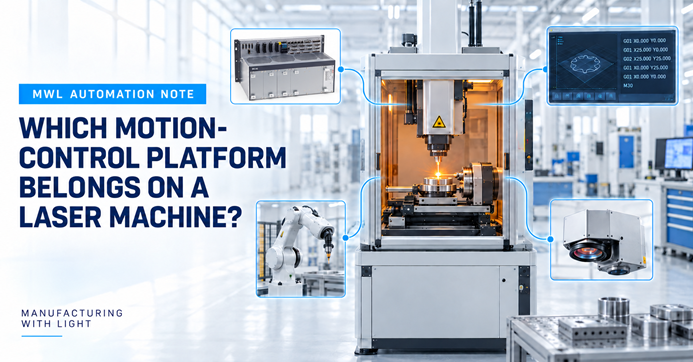
Which Motion-Control Platform Belongs on a Laser Machine?

When someone says a machine has “motion control,” that does not tell you very much. A PLC controlling two positioning axes has motion control. A CNC following thousands of G-code blocks has motion control. A six-axis robot carrying a laser head has motion control. A galvanometer scanner moving a beam across a small field has … Read more

Build the Machine. Standardize the Control System.

Automation Notes What If We Standardized the Control System Before Building the Next Laser Machine? The machine should be custom. The control foundation does not always have to be. One thing that has bothered me for years in custom machine building is how often we solve the same control problems over and over again. A … Read more

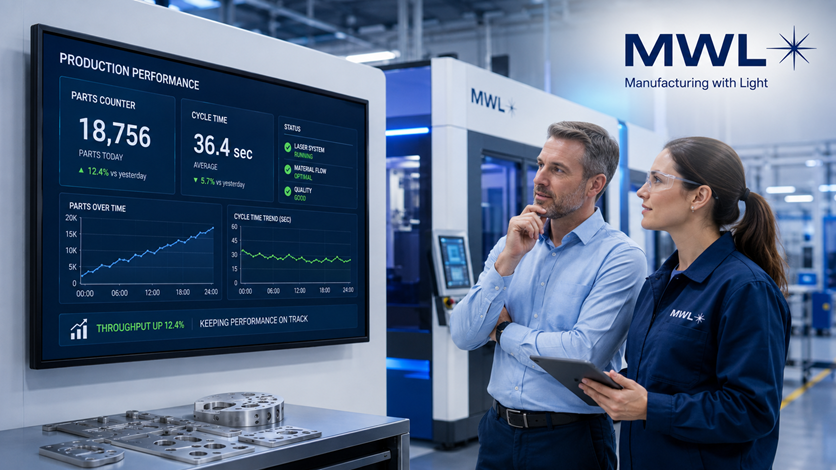
Your Laser Machine Works. But Can You Make It Run Faster?

Why higher programmed speed does not always mean more good parts per hour By William Kane | Manufacturing with Light (MWL) Eventually, almost every successful production machine gets the same request: “We need more parts per hour.” With a laser cutting machine, the first reaction is often obvious: increase the feed rate. If the process … Read more

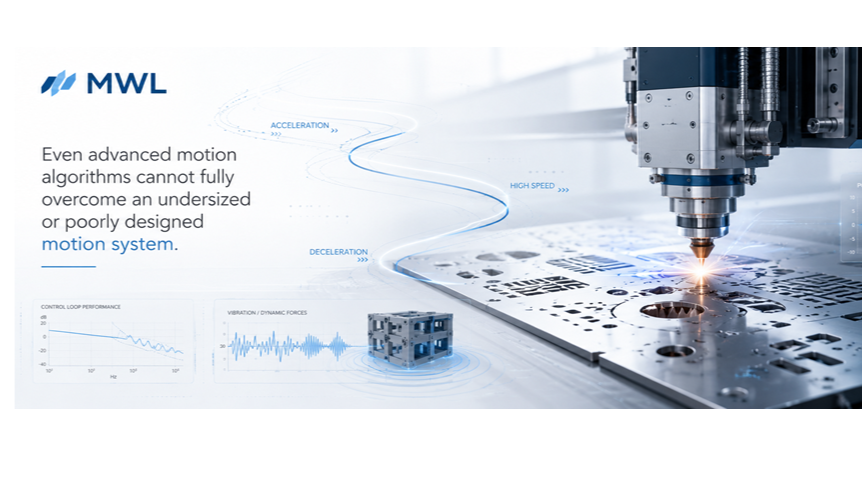
Advanced Motion Algorithms Are Powerful — But Physics Still Gets a Vote

Modern motion controllers are amazing. In laser processing, advanced algorithms can smooth corners, reduce vibration, improve path following, synchronize laser firing, and help squeeze more performance out of a machine. Features such as input shaping, look-ahead, contour smoothing, and frequency-response-based tuning are real tools that can make a good machine much better [1][2][3][4]. But they … Read more

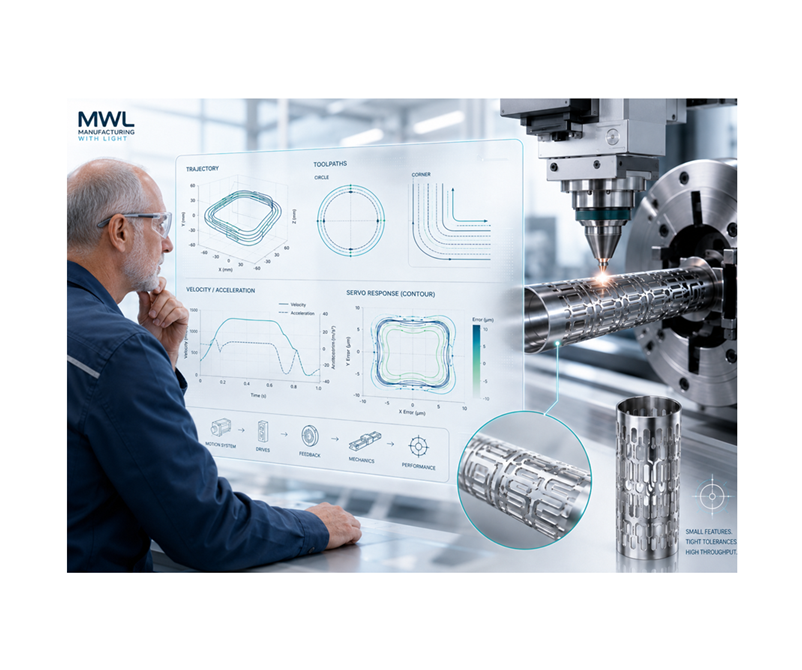
Small Features Change the Way We Size a Laser-Cutting Motion System

When people begin sizing a motion system for a laser-cutting machine, the conversation often starts with familiar numbers: Those questions matter, but they do not tell the whole story when the machine must cut small features at high production rates. A motion system can move very quickly across a large work area and still struggle … Read more

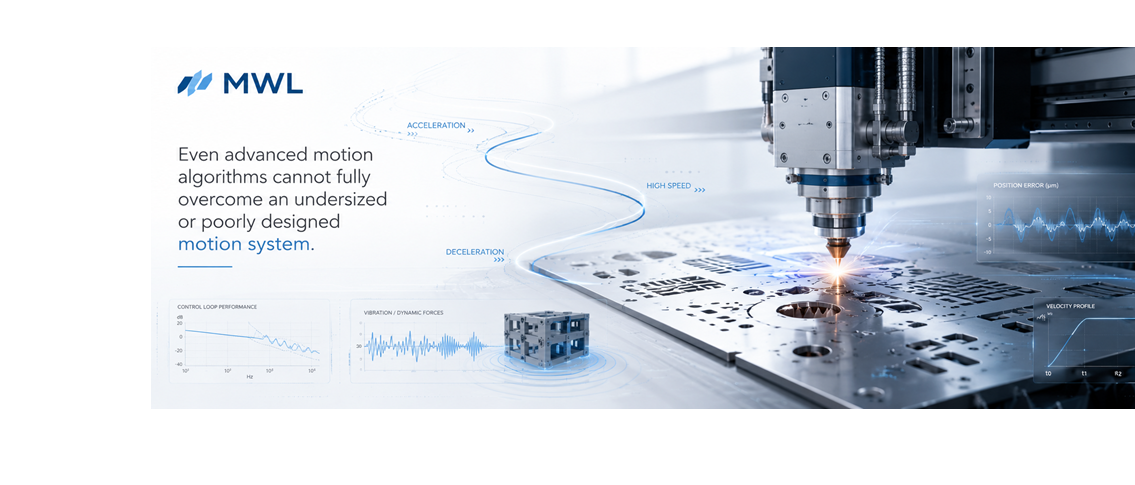
Advanced Motion Algorithms Are Powerful — But Physics Still Gets a Vote

Modern motion controllers are amazing. In laser processing, advanced algorithms can smooth corners, reduce vibration, improve path following, synchronize laser firing, and help squeeze more performance out of a machine. Features such as input shaping, look-ahead, contour smoothing, and frequency-response-based tuning are real tools that can make a good machine much better [1][2][3][4]. But they … Read more

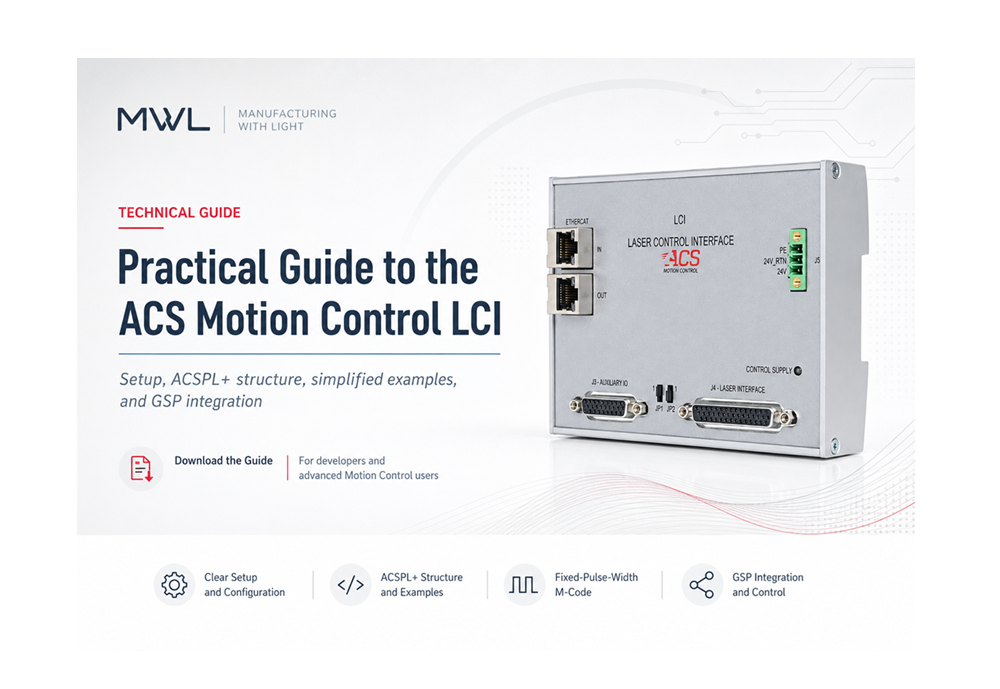
Practical Guide to the ACS Motion Control LCI

Setup, ACSPL+ structure, simplified examples, GSP integration, and a robust fixed-pulse-width M-code   For current ACS Motion Control users with programming experience   Initialize the LCI and establish a repeatable startup sequence   Understand the most useful structure fields and operating modes   Use PWM, fixed-distance pulsing, and segment gating   Expose LCI functions to … Read more