What makes a handheld laser worth more to you
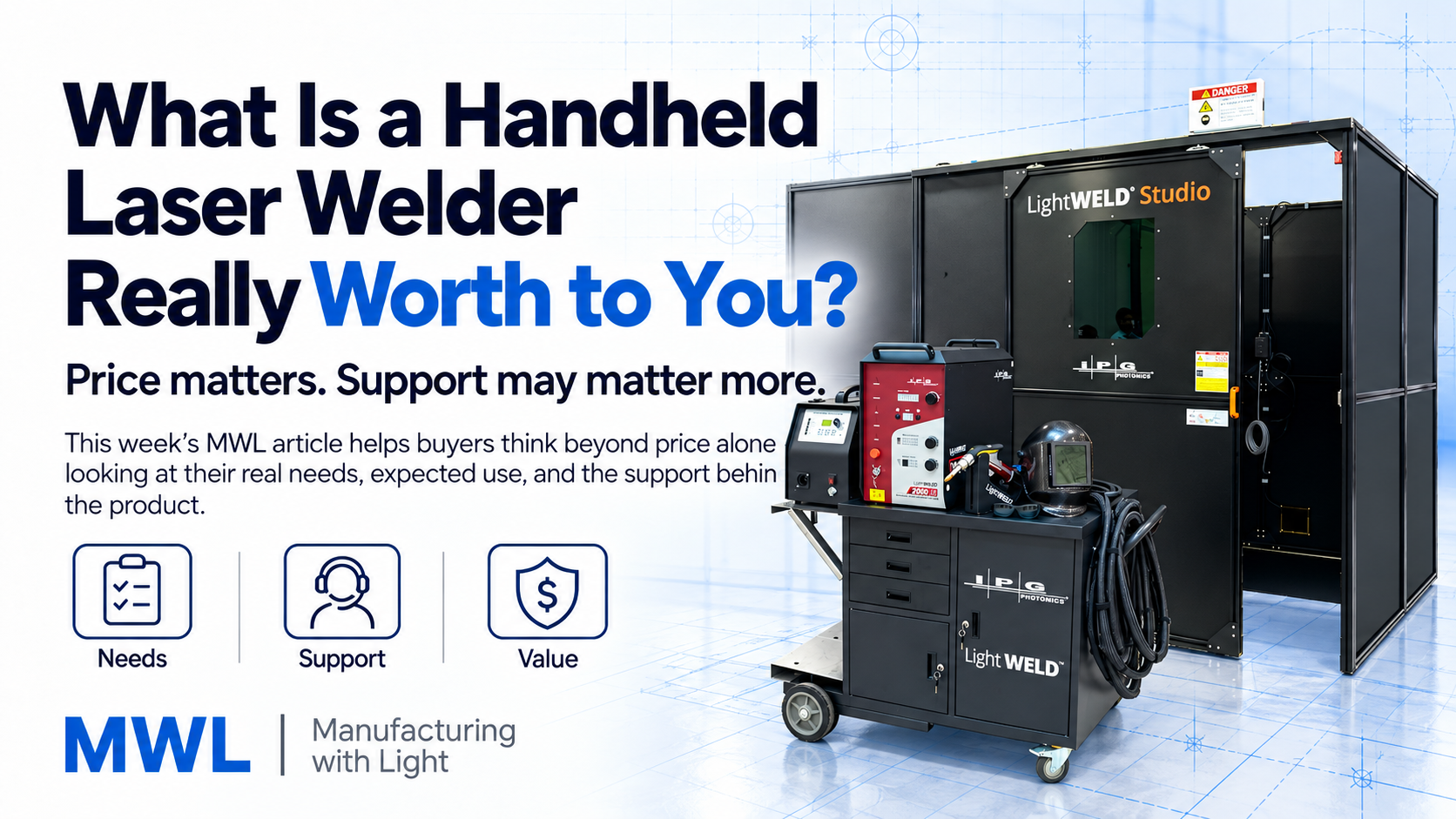
What makes a handheld laser welder worth more? Reliability, safety, application support, training, service, and the people behind the product can matter as much as the machine.
What makes a handheld laser welder worth more? Reliability, safety, application support, training, service, and the people behind the product can matter as much as the machine.

Facts, tradeoffs, and a few questions worth asking before choosing a machine Fiber Core Size in Handheld Laser Welding: Smaller Is Powerful — But It Isn’t the Whole Story A few months ago, when I first started taking a serious look at handheld laser welding, I was talking with a former colleague about the technology. … Read more
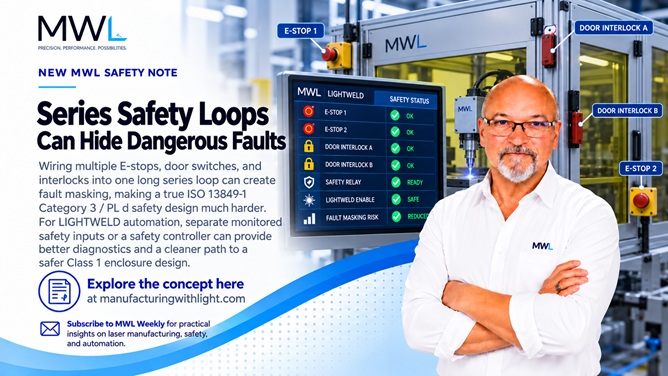
A concern for anyone automating or enclosing a LightWELD system I have been thinking more about this as I consider taking LightWELD beyond handheld welding and into enclosed or automated systems. Years ago, while working on a Class 1 laser machine containing Class 4 lasers, I learned that one of the harder parts of the … Read more
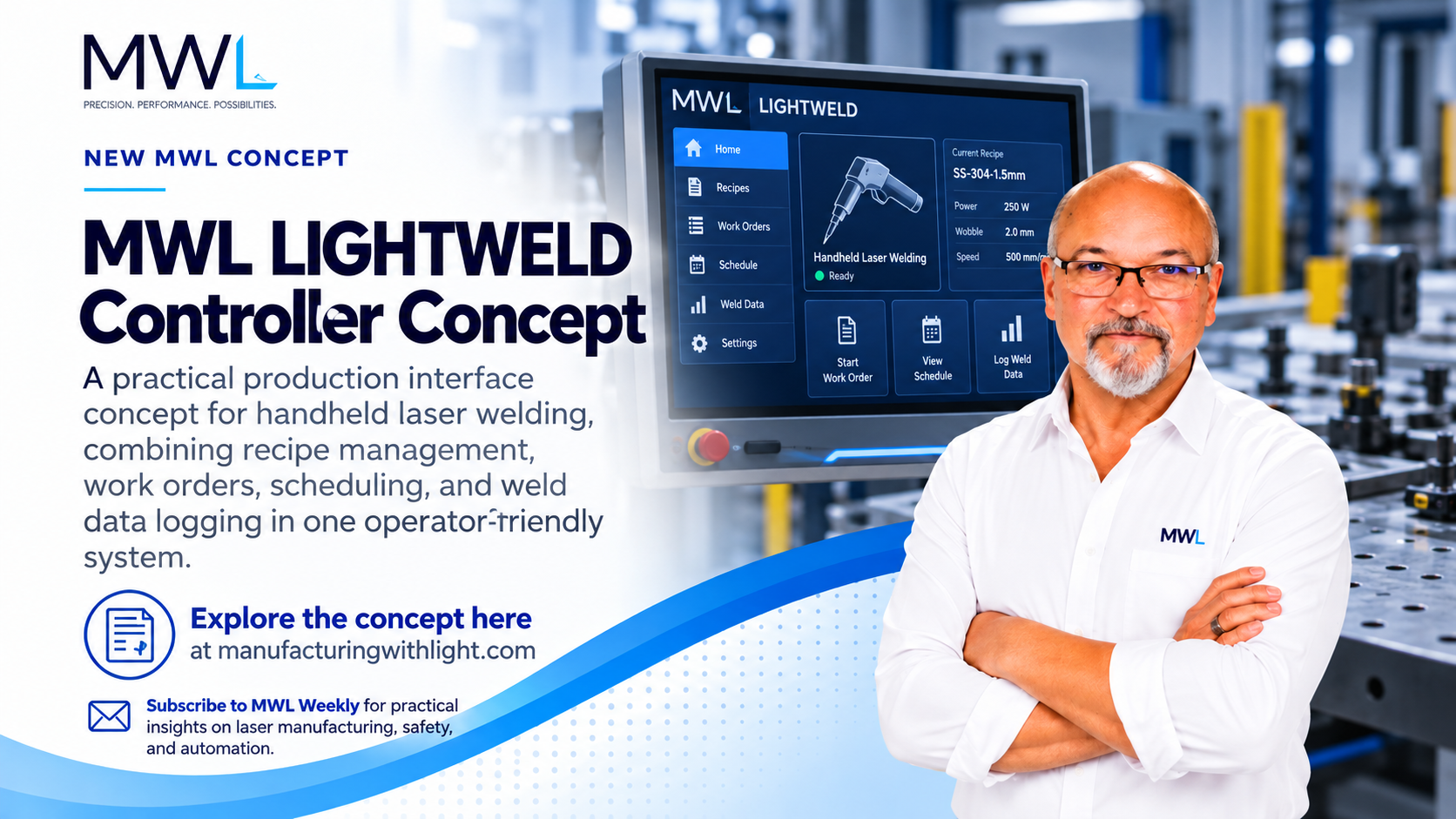
Handheld laser welding is becoming more than a standalone welding tool. As LightWELD moves into regular production and robotic cells, MWL is developing a customizable interface to connect the part, the operator instructions, the approved laser settings, and the production record. LightWELD Is Becoming a Production Tool I come from a background of building automated … Read more

A Manufacturing With Light Perspective September 23, 2026 I only began paying close attention to handheld laser welding a few months ago, when I started Manufacturing With Light. Now it’s clear that a lot had been happening while I wasn’t paying attention. I feel a little like I walked into a movie during the second … Read more

September 15, 2026 This is an opinion shaped by my background in controls, software, motion, and automation on laser manufacturing systems. I’m not a welding engineer. But years spent working around automated laser cutting and welding taught me one thing pretty clearly: a good laser weld normally came from developing a process, not simply choosing … Read more

Handheld laser welding is getting faster, easier to use, and more capable. But in my view, its long-term future depends on treating it like what it is: a real welding process requiring trained and qualified people. It is hard not to pay attention to handheld laser welding when you are trying to launch a newsletter … Read more

A practical, easy-to-understand guide for U.S. manufacturers and fabrication shops considering handheld laser welding. It covers safety, equipment selection, setup, process basics, materials, joint design, fume control, qualification, quality, and practical steps for getting started—supported by reliable industry, government, manufacturer, and peer-reviewed sources.
Handheld laser welding is gaining attention for good reason. In suitable applications, it can produce fast, clean welds with low heat input, limited distortion, and less post-weld finishing.[1] For weld shop owners and supervisors, however, the real question is not simply whether the process works. It is whether it can be introduced safely, consistently, and … Read more
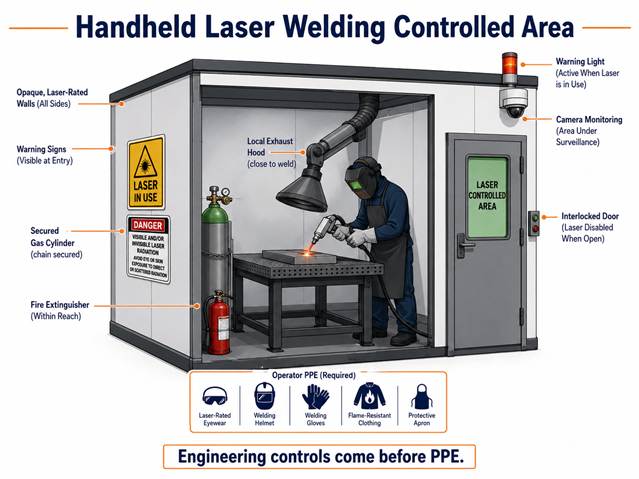
Learning Objectives Figure 3-1. Example of a controlled handheld laser welding area with access control, extraction, monitoring, and operator PPE. 3.1 Class 4 Means Immediate Hazard The U.S. Food and Drug Administration describes Class IV lasers as capable of causing immediate skin and eye injury from the direct or reflected beam and as presenting a … Read more